Tailored Coat: Shoulder Pads

Moving onto shoulder pads...

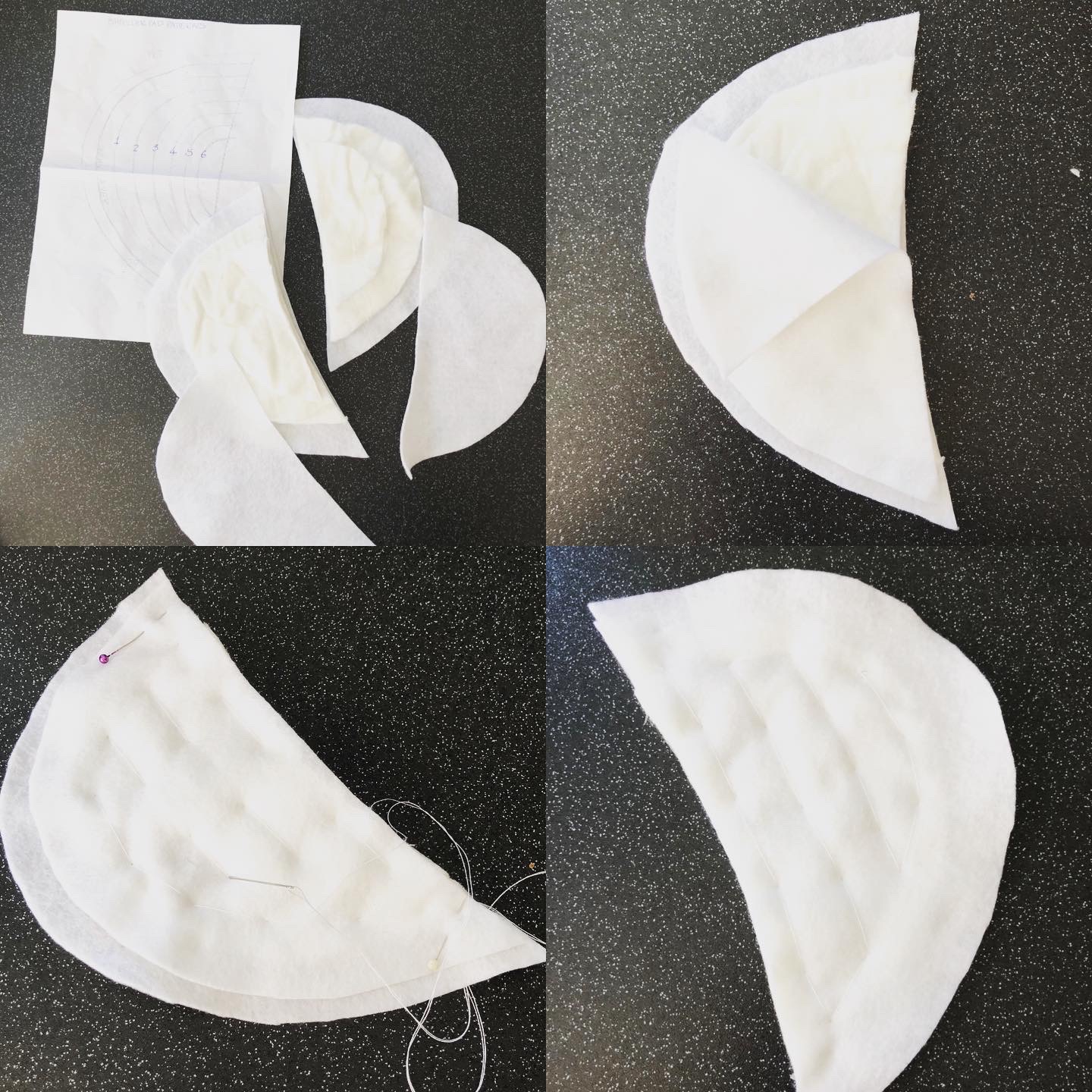
You can buy shoulder pads but they can be quite expensive. I've found that if you buy the fabrics, its quicker and cheaper to make your own.You only need felt (available from most craft and haberdashery shops) and wadding
Two layers of felt; a top and under layer (this one is slightly smaller), with three layers of graded wadding or batting in between. Rows of handsewn backstitches secure them all together through the middle. I also run a loose running stitch around the outer edges too.

Patterns for the shoulder pad shapes are widely available for free online. I think i found mine on pinterest :)


Tailored Coat: Fusing

And we're carrying on with the tailored coat journey...

I'm now on to the interfacing (or fusing/ vilene/ fusible interlining as its also known). As i don't have the resources to fully tailor my coat, i'm making it semi-tailored instead. Well-placed fusing helps to reinforce the wool fabric to improve its strength, and a heat press is the best way to evenly bond it. 

You can use a domestic iron if you wish, but turn the steam off, highest heat possible (you may need a protective layer of scrap fabric between the iron and your final fabric if its delicate), and stamp you iron evenly over the fusing. Don't move the iron forwards/ backwards across the fabric as its fusing as this will cause the fabric to stretch. You can also block fuse the fabric first, but i find that this can waste a lot of fabric, so prefer to cut to size but do more fabric prep instead. 

Tailored Coat: time to cut out!

The adventures of my tailored coat continue...the fabric is laid out and prepared; the patterns and grainlines have all been aligned with the selvedges. Each of the 30 plus pieces of pure wool, lining and interfacing are all ready to go...and on to the next stage!


Tailored Coat: The labour of love continues!

Continuing into Me Made May is the labour of love that is my new tailored coat. The patterns have all been drafted, including the linings - now to prep the fabric all of which is either reclaimed or recycled.

Did you know that its really important to steam your fabrics before you cut them? This helps to remove the natural elasticity from the fibres and helps with shrinkage. You can also wash the fabrics before steaming them as this also helps to prepare the fabric.